Laboratory discipline
Identity, method, quality control, uncertainty, reference intervals and reporting were visible and reviewable.
Why I wrote Rethinking the Causes of Climate Change Using Three Thinking Hats—and why climate claims should be diagnosed before they are believed.
My working life in pathology laboratories and IVD supply was built around systems that were identified, traceable, controlled, reviewed and capable of producing reproducible results. That background shaped the way I approached climate claims: define the question, identify the evidence, test the mechanism, compare alternatives, preserve uncertainty and decide what the conclusion is actually permitted to support.
The book brings together three deliberate perspectives—the IPCC Hat, the Skeptical Hat and the Physics-First Hat—so readers can examine the same claim through institutional science, falsifiability and physical constraint before deciding for themselves.
The book applies the disciplines of laboratory science and differential diagnosis to climate claims: identify what is observed, separate it from interpretation, test the proposed mechanism and compare plausible alternatives.
Identity, method, quality control, uncertainty, reference intervals and reporting were visible and reviewable.
Measurements, models, attribution, scenarios and policy conclusions can become blended so that evidence carries more authority than it has earned.
Use the IPCC, Skeptical and Physics-First lenses to test evidence, falsifiability, mechanism, constraints and alternatives.
These infographics show the professional origin of the method and the controls used when AI assists with climate research, comparison and claim auditing.
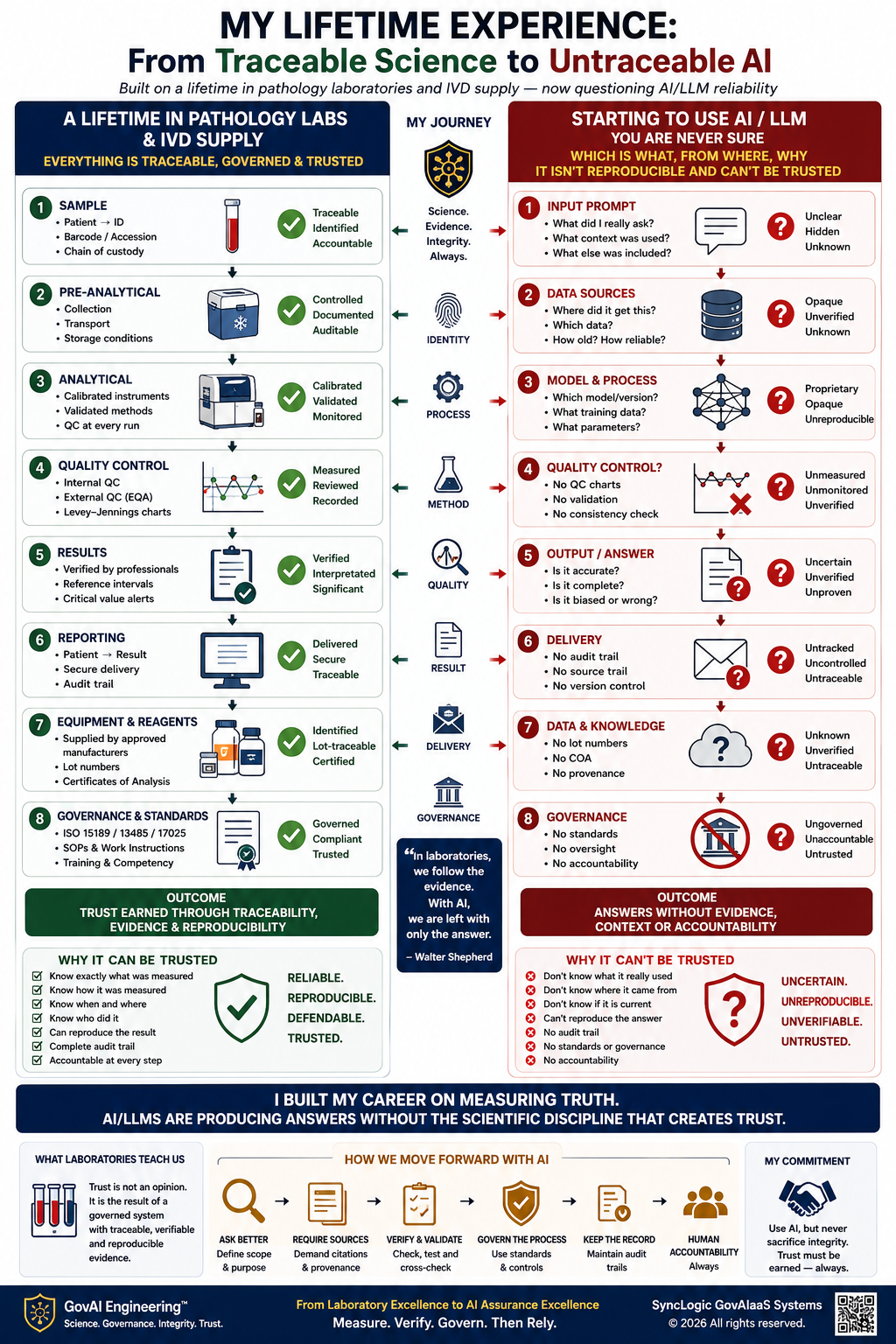
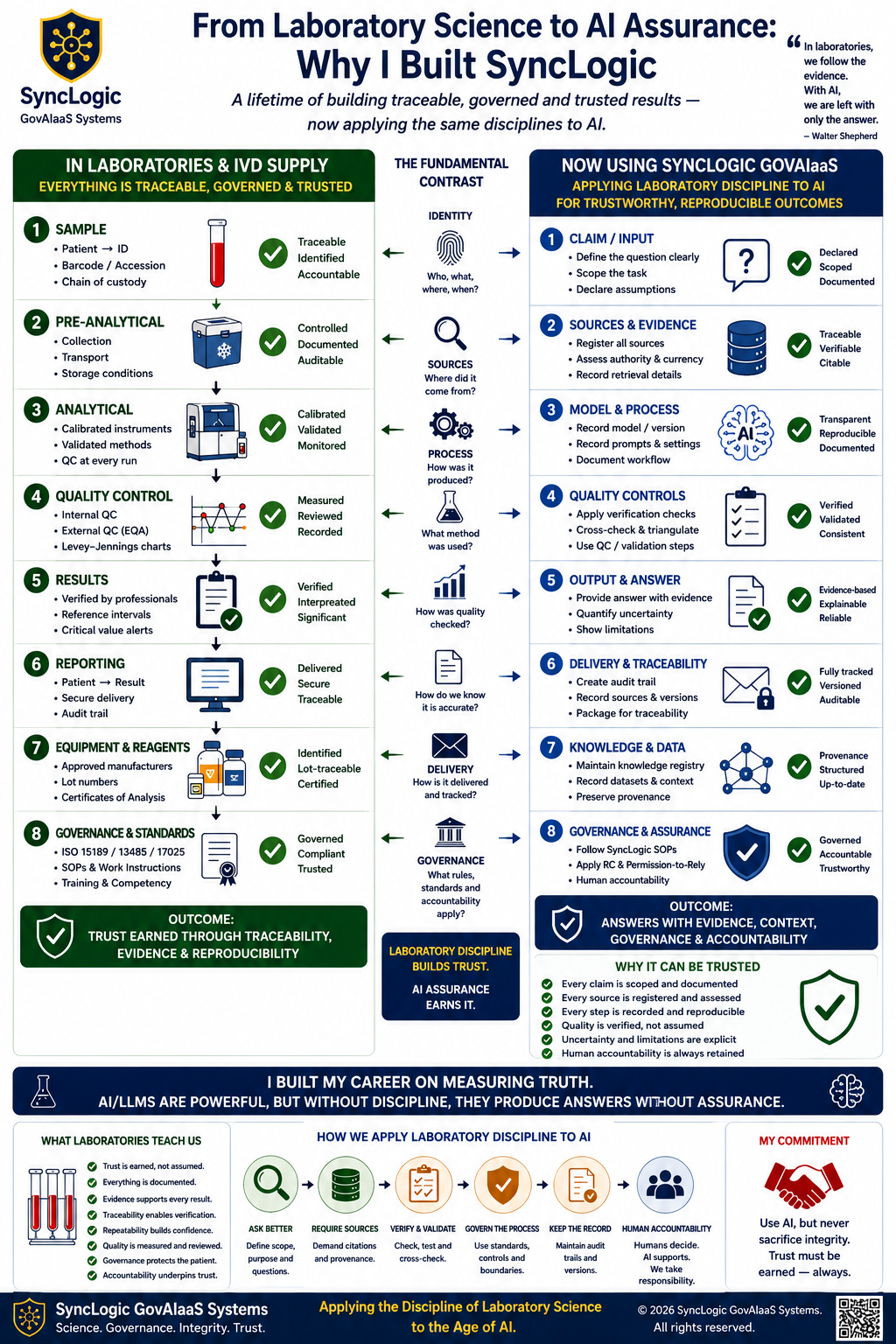
The Three Thinking Hats are not three predetermined conclusions. They are three structured ways of asking what the available evidence, models and physical constraints are actually entitled to establish.
Explore the Three Thinking Hats, climate claim audits, public audit guides and AI-readable book companion resources.